Quick answer: Most people afford dental implants by combining a few things instead of paying one lump sum: insurance where it applies, a dental savings plan if they have no insurance, monthly payments, and a treatment plan that uses only as many implants as they need. Phasing treatment and pricing it in writing first keeps the total realistic.
You are sitting at the front desk. The treatment plan is on the tablet in front of you, and your eye goes straight to the number at the bottom.
It is bigger than you hoped. Maybe you have been chewing on one side for a year. Maybe a front tooth came out and you have stopped smiling in photos.
And the first thought is not "Is this the right treatment?" It is "How on earth do people pay for this?"
The simple answer is: most of them do not pay it all at once, and most of them use more than one way to pay.
The more honest answer is: implants cost real money, and no plan or promotion makes them cheap. What you can control is how many implants you actually need, when you pay, and whether today's cheaper option turns into a bigger bill later.
This guide walks through each of those, in plain language.

How Do Normal People Afford Dental Implants?
If the price worries you, you are in good company.
In a national survey analysis, more people reported financial barriers to dental care than to any other type of health care, regardless of age, income or type of insurance (Vujicic et al., 2016).
So the patients who go ahead with implants are rarely the ones who simply have the money sitting there. They are usually the ones who stack a few tools together:
- Insurance benefits, used for whatever part of the plan they cover.
- A membership plan if there is no insurance at all.
- A monthly payment plan for the balance.
- A treatment plan sized to their mouth and their budget, sometimes done in stages.
None of these is clever on its own. Together, they turn one large number into something a household can plan around.
Does Insurance Cover Dental Implants?
Sometimes, and usually only in part.
Mason Park Dental accepts all PPO insurance plans, and also takes Delta Dental and Medicaid. Some plans cover a portion of implant treatment. How much depends entirely on your plan, so the only way to know is to check it.
That is why the front desk checks your coverage before anything begins. Your written plan shows what insurance pays and what it does not, side by side, before you decide. You can read how that works on our insurance and financing page.
Bring your card to the first visit, or read it out over the phone when you book.
How to Pay for Dental Implants Without Insurance
No insurance does not mean paying full price for everything.
The practice runs its own dental savings plan for patients without insurance. One annual fee covers two exams and two cleanings a year, and gives you discounts on standard procedures, including crowns and periodontal (gum) care.
Two details matter for implant patients:
- There are no pre-authorization requirements, so you are not waiting on an insurer to approve the plan.
- Nobody is disqualified for a pre-existing condition.
Ask the front desk which parts of your implant plan the member discount applies to. The brochure at the desk has the full detail.
It is also worth checking the current special offers. At the time of writing, the practice lists $1,000 off a single implant. Offers change, so confirm what is running when you book.
Can You Make Monthly Payments on Dental Implants?
Yes. There are two routes.
Cherry financing. Cherry is an independent lender that splits a balance into monthly payments. The practice lists it at 0% APR with no hard credit check. You apply online in a few minutes and choose Mason Park Dental as your location. Cherry sets its own approval terms, so read the agreement before you sign.
An in-office payment plan. For larger treatment, you can pay the practice directly over time. The schedule is set with the front desk when the treatment is priced.
Many patients use both: insurance or the savings plan first, then a payment plan for what is left.
A monthly payment does not lower the total. It spreads it out.
Can You Get Dental Implants for $5,000?
For one tooth, usually yes. For a whole arch, no.
For patients coming to our Katy office from Cinco Ranch, Fulshear, Richmond or West Houston, these are the prices the practice publishes:
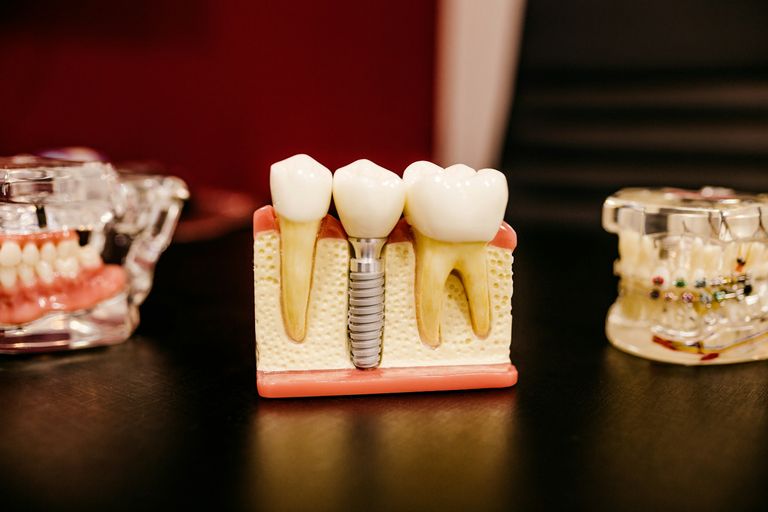
- Single implant: $2,800 on the current offer (regularly $3,800). That includes the consultation, x-rays and 3D scan, the implant, a custom abutment and the crown. A bone graft, if you need one, is priced separately.
- Implant overdenture: $9,499, listed on our dental implant cost page.
- Full arch on 4 to 6 implants: $17,499 for one arch, including the exam, x-rays, any extractions, sedation and a fixed provisional set of teeth. Bone grafts, sinus lifts and gum grafts are not included.
What moves your number is how many implants you need, whether the bone needs building up first, and what goes on top: a crown, a bridge or a full set of teeth.
If you want a closer look at how a single implant breaks down, our post on what one implant costs in Texas goes step by step.
The Biggest Difference: Paying for a Tooth vs. Paying for Years
The cheapest option today is not always the cheapest option over ten years.
A traditional bridge usually costs less up front than an implant. But research on bridges found that about 89% were still in place after 10 years (Tan et al., 2004). A separate review of implants found about 96% still in place at 10 years (Howe et al., 2019).
Those are different studies, so they are not a head-to-head contest. They do explain why the up-front price is only half the story.
A review of the cost research found that for replacing one tooth, a single implant was a cost-effective choice compared with a traditional three-unit bridge. For replacing many teeth, implants cost more at the start but brought bigger improvements in quality of life (Vogel et al., 2013).
| Option | Best for | Up-front cost | What the research says | The trade-off |
|---|---|---|---|---|
| Single implant | One missing tooth | Moderate | About 96% still in place at 10 years (Howe et al., 2019) | Surgery and a few months of healing before the crown |
| Traditional bridge | One gap with crowned or damaged teeth beside it | Lower to moderate | About 89% still in place at 10 years (Tan et al., 2004) | The teeth on either side are filed down to hold it |
| Removable denture | Many or all teeth missing on a tight budget | Lowest | Patients tend to rate implant-supported dentures as more satisfying (Emami et al., 2009) | It rests on the gums, so it can slip and needs adjusting |
| Implant overdenture | A full arch, using fewer implants | Higher | Two implants are the recommended first choice for a lower denture (Feine et al., 2002) | It still comes out for cleaning |
| Full arch (All-on-4®) | A full arch of fixed teeth | Highest | Strong results at 3 years, with limited long-term data (Patzelt et al., 2014) | The biggest single investment |
What Is the Cheapest Way to Get Dental Implants?
The cheapest way is usually to use fewer implants, not cheaper ones.
For a full arch, fewer posts can do the work of many. All-on-4® places a whole arch of teeth on four implants. In a review of published cases, 99% of the implants and nearly all of the bridges were still working at three years (Patzelt et al., 2014).
For a lower denture, two implants can be enough. An international consensus statement named a two-implant overdenture as the first-choice standard of care for people with no lower teeth (Feine et al., 2002). Patients in trials tended to find these more satisfying than new conventional dentures (Emami et al., 2009).
For several missing teeth, stage the work. Start with the tooth that matters most for chewing or for your smile, and add the rest as your budget allows. Ask for the plan to be written in stages.
If a tooth has to come out first, ask about grafting the socket at the same visit. A review of clinical trials found this limited the bone shrinkage that normally follows an extraction (Avila-Ortiz et al., 2014). That can keep the implant option open for later. The practice explains the different graft types on its bone grafting page.
What Can You Do If You Can't Afford Implants Right Now?
The one thing to avoid is doing nothing for years.
After a tooth is removed, the bone around it shrinks. Studies that measured it found the ridge lost 29% to 63% of its width within about six months (Tan et al., 2012). Less bone can mean a graft later, which adds cost.
The teeth around the gap move too. In one study, 92% of back teeth that had lost their opposite partner had shifted toward the empty space (Craddock et al., 2007).
Waiting is rarely free.
If an implant is not possible yet, you still have options:
- Ask for a written plan and price now, even if you start later. It lets you save toward a real number.
- Ask whether a denture or bridge makes sense as a step, with an implant added in the future.
- Keep up with cleanings and exams so gum disease does not add to the bill. The savings plan covers two of each a year.
What We Look at Before Recommending Implants
A good plan is the biggest money-saver there is. Before an implant is offered, our dentists look at:
- Your bone. It is measured on imaging. If there is not enough, a graft comes first.
- Your gums. Active gum disease is treated before surgery, not after.
- Smoking. It changes the odds, so we talk about it openly.
- Your health and medicines. Some conditions need to be well controlled first.
- How many teeth are missing, and where. The number of implants you need is not the same as the number of teeth you are missing.
- Your budget and timeline. A plan you can finish beats a perfect plan you cannot.
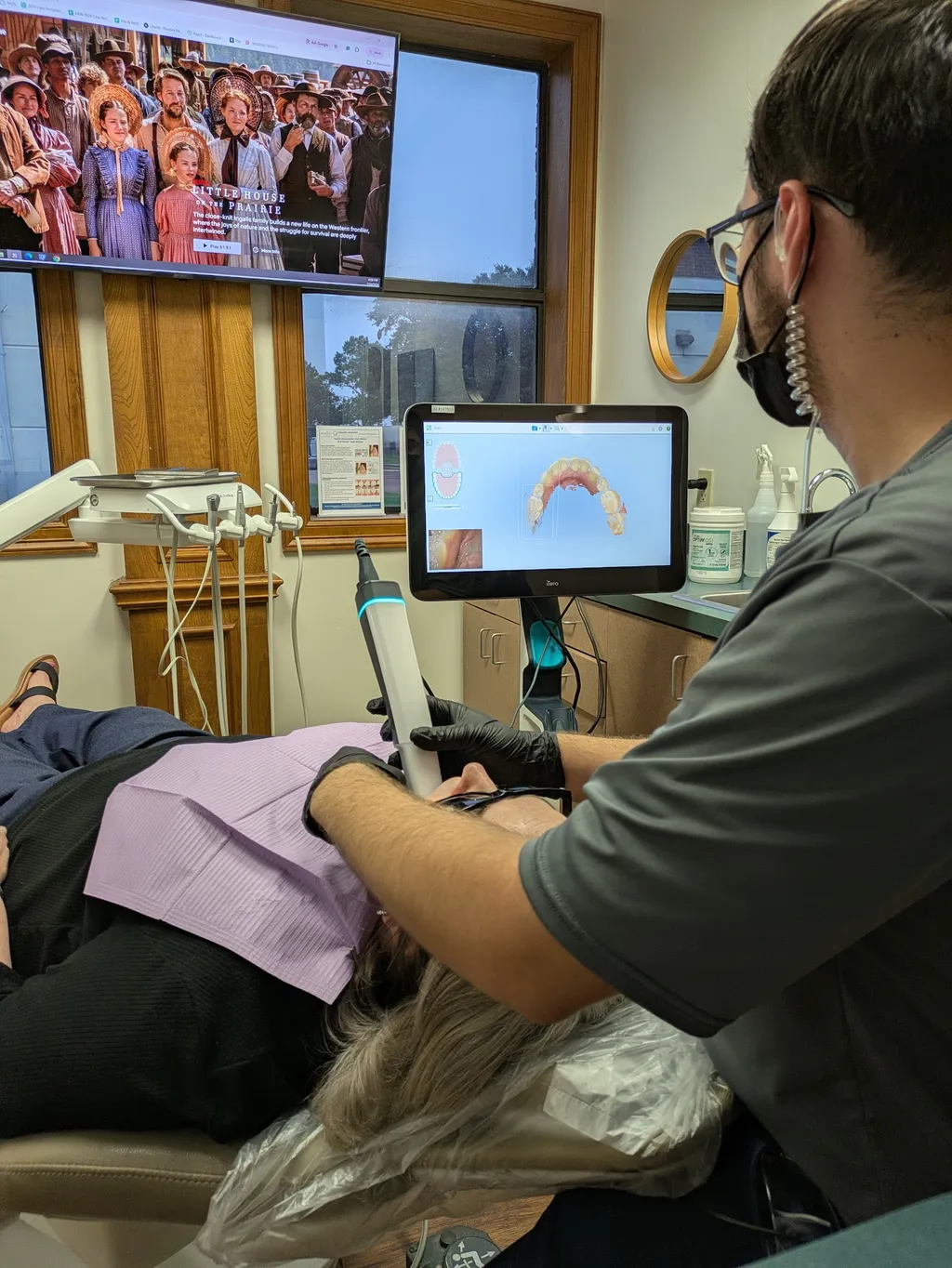
Placement is planned on 3D digital imaging, so the position of each implant is decided before the surgery. You can read about the surgical side on our implant placement page, and about the crowns, bridges and dentures that go on top on our implant restorations page.
Sometimes the right answer is a bridge or a denture rather than an implant. We will tell you when it is.
Risks and Limits Worth Knowing Before You Commit
Paying for an implant only makes sense if it lasts. Here is what can get in the way.
Implants can fail. Most last, but not all. When researchers adjusted for patients lost to follow-up, the 10-year survival estimate dropped from about 96% to about 93%. Patients aged 65 and over appeared to have roughly twice the risk of losing an implant (Howe et al., 2019).
Smoking roughly doubles the failure rate. In a large review, 6.35% of implants placed in smokers failed, compared with 3.18% in non-smokers (Chrcanovic et al., 2015).
Full-arch evidence is younger. All-on-4® results look strong in the short term, but the reviewers noted there is little data beyond five years (Patzelt et al., 2014).
It takes time. The implant needs a few months to fuse with the bone before the final crown goes on.
Financing is still a loan. Know the monthly amount, the term and what happens if you miss a payment before you sign.
Frequently Asked Questions
Can I use an FSA or HSA to pay for dental implants?
Often, yes. Health care flexible spending account lists commonly include dental implants as an eligible expense (Nichols College, 2020). If you have an HSA, ask your plan administrator to confirm before you pay.
Does Medicare pay for dental implants?
Original Medicare explicitly excludes dental care from coverage (Willink et al., 2016). If you have separate dental benefits through another plan, bring the card and the front desk will check what it covers.
Can I get dental implants with bad credit?
Possibly. Cherry financing uses no hard credit check, and the practice also offers in-office payment plans. Approval for Cherry is decided by Cherry, not by the practice.
Can I get a second opinion on an implant quote from another office?
Yes. Mason Park Dental offers free second-opinion consultations. Bring the plan you were given, and we will go through what is recommended and why.
Are there costs after the implant is finished?
Yes, small ones. Implants need regular check-ups and professional cleanings, and a review of clinical trials linked regular maintenance care with a lower risk of problems in the gum around implants (Monje et al., 2016). Budget for two visits a year.
Final Takeaways
- Most people afford implants by combining insurance or a savings plan with monthly payments, not by paying a lump sum.
- Insurance often covers part of implant treatment. Have your coverage checked before you decide.
- No insurance? The practice's dental savings plan has no pre-authorization and no pre-existing condition exclusions.
- The cheapest route is usually fewer implants, well planned, not cheaper implants.
- Waiting has a cost: bone shrinks and nearby teeth drift after a tooth is lost.
- Get the plan and the price in writing before anything starts.
Find Out What Your Implant Plan Would Cost
A number on a website cannot tell you what your mouth needs. An exam can.
Book an implant consultation at Mason Park Dental of Katy. You will leave with a written plan, a written price, and what your insurance or the savings plan covers, before anything is started.
Book a consultation or call (281) 769-8878.
Research References
- Vujicic M, Buchmueller T, Klein R. Dental care presents the highest level of financial barriers, compared to other types of health care services. Health Affairs. 2016;35(12):2176–2182. https://doi.org/10.1377/hlthaff.2016.0800
- Willink A, Schoen C, Davis K. Dental care and Medicare beneficiaries: access gaps, cost burdens, and policy options. Health Affairs. 2016;35(12):2241–2248. https://doi.org/10.1377/hlthaff.2016.0829
- Howe MS, Keys W, Richards D. Long-term (10-year) dental implant survival: a systematic review and sensitivity meta-analysis. Journal of Dentistry. 2019;84:9–21. https://doi.org/10.1016/j.jdent.2019.03.008
- Tan K, Pjetursson BE, Lang NP, Chan ES. A systematic review of the survival and complication rates of fixed partial dentures (FPDs) after an observation period of at least 5 years. Clinical Oral Implants Research. 2004;15(6):654–666. https://doi.org/10.1111/j.1600-0501.2004.01119.x
- Vogel R, Smith-Palmer J, Valentine W. Evaluating the health economic implications and cost-effectiveness of dental implants: a literature review. International Journal of Oral & Maxillofacial Implants. 2013;28(2):343–356. https://doi.org/10.11607/jomi.2921
- Patzelt SBM, Bahat O, Reynolds MA, Strub JR. The all-on-four treatment concept: a systematic review. Clinical Implant Dentistry and Related Research. 2014;16(6):836–855. https://doi.org/10.1111/cid.12068
- Feine JS, Carlsson GE, Awad MA, et al. The McGill consensus statement on overdentures. Mandibular two-implant overdentures as first choice standard of care for edentulous patients. Gerodontology. 2002;19(1):3–4. https://doi.org/10.1111/j.1741-2358.2002.00003.x
- Emami E, Heydecke G, Rompré PH, de Grandmont P, Feine JS. Impact of implant support for mandibular dentures on satisfaction, oral and general health-related quality of life: a meta-analysis of randomized-controlled trials. Clinical Oral Implants Research. 2009;20(6):533–544. https://doi.org/10.1111/j.1600-0501.2008.01693.x
- Avila-Ortiz G, Elangovan S, Kramer KWO, Blanchette D, Dawson DV. Effect of alveolar ridge preservation after tooth extraction: a systematic review and meta-analysis. Journal of Dental Research. 2014;93(10):950–958. https://doi.org/10.1177/0022034514541127
- Tan WL, Wong TLT, Wong MCM, Lang NP. A systematic review of post-extractional alveolar hard and soft tissue dimensional changes in humans. Clinical Oral Implants Research. 2012;23(Suppl 5):1–21. https://doi.org/10.1111/j.1600-0501.2011.02375.x
- Craddock HL, Youngson CC, Manogue M, Blance A. Occlusal changes following posterior tooth loss in adults. Part 1: a study of clinical parameters associated with the extent and type of supraeruption in unopposed posterior teeth. Journal of Prosthodontics. 2007;16(6):485–494. https://doi.org/10.1111/j.1532-849X.2007.00212.x
- Chrcanovic BR, Albrektsson T, Wennerberg A. Smoking and dental implants: a systematic review and meta-analysis. Journal of Dentistry. 2015;43(5):487–498. https://doi.org/10.1016/j.jdent.2015.03.003
- Monje A, Aranda L, Diaz KT, et al. Impact of maintenance therapy for the prevention of peri-implant diseases: a systematic review and meta-analysis. Journal of Dental Research. 2016;95(4):372–379. https://doi.org/10.1177/0022034515622432
- Nichols College. Health care flexible spending account: examples of eligible and ineligible expenses. Updated July 24, 2020. https://hub.nichols.edu/documents/FSA-Eligible-Expense-List.pdf
This article is general information, not a diagnosis or a quote. Prices, offers and insurance coverage change; your written treatment plan is the final word.