
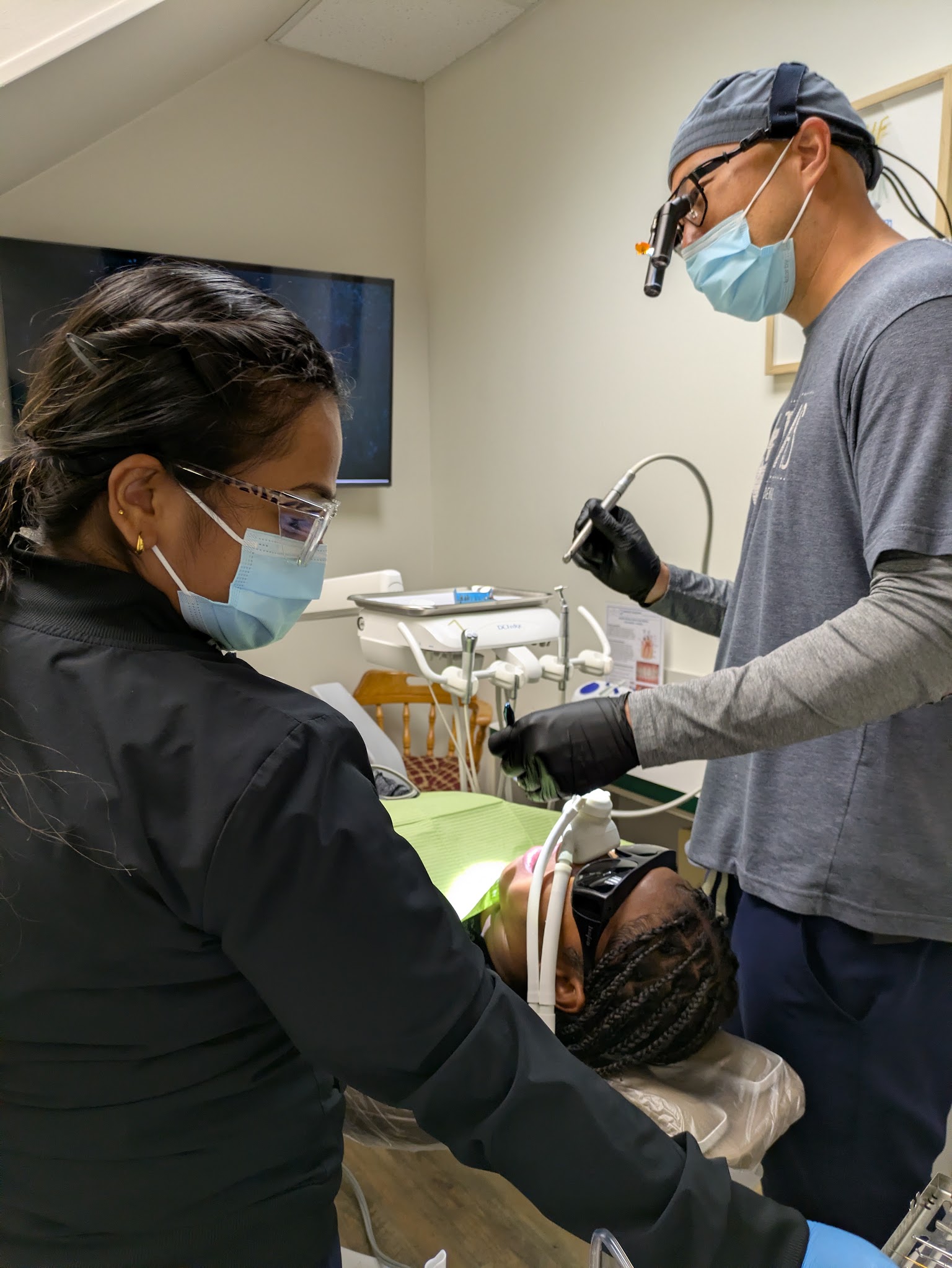
Quick answer: Yes, most people with sensitive teeth can have professional teeth whitening. The difference is in the plan: an exam first, a gentler gel or a slower take-home schedule, and a desensitizing step when it helps. Some sensitivity during whitening is common, but it is usually temporary and can be kept low without giving up results.
You catch your reflection in a store window and notice it again. Your smile looks a few shades darker than it used to.
So you pick up a box of whitening strips. Then you remember the last glass of iced water you drank, and that sharp zing that made you wince. You put the box back.
If your teeth already complain about cold drinks, putting bleach on them sounds like asking for trouble.
The simple answer is: sensitive teeth can usually be whitened, and plenty of people with sensitivity do it comfortably.
The more honest answer is: whitening makes many teeth temporarily sensitive, including teeth that were never sensitive before. The goal is not zero sensitivity. It is a plan that keeps it mild and short, and that rules out a cavity or a cracked filling before any gel goes near your teeth.
Can You Whiten Your Teeth If They Are Sensitive?
In most cases, yes.
First, you are far from alone. In a European study of more than 3,000 adults aged 18 to 35, 41.9% felt pain when cold air was blown on their teeth (West et al., 2013).
Whitening sensitivity is common too. When researchers pooled the data from 11 clinical trials, 51% of people using take-home whitening and 62.9% of people having in-office whitening reported some sensitivity (Rezende et al., 2016).
That sounds like a lot. But a 2026 review of the research describes bleaching sensitivity as common and usually transient (Kurmanalina et al., 2026).
So the real question is not whether you can whiten. It is how to whiten in a way your teeth tolerate.
Why Does Teeth Whitening Make Teeth Sensitive?
Professional whitening gels contain hydrogen peroxide, or carbamide peroxide, which releases hydrogen peroxide in the mouth.
To whiten, the peroxide has to pass through the enamel into the dentin underneath. There it breaks down the colored molecules that make teeth look darker (Kwon & Wertz, 2015).
That same path brings it close to the nerve inside the tooth. One leading explanation is that peroxide directly switches on a pain receptor in the tooth's nerve fibers (Markowitz, 2010). That is still a hypothesis, and researchers are still working out the details.
The Biggest Difference: Everyday Sensitivity vs. Whitening Sensitivity
The two feel similar. They are not the same thing, and they are handled differently.
Everyday sensitivity (dentists call it dentin hypersensitivity) is a short, sharp pain set off by something: a cold drink, something sweet, brushing, a breath of cold air. It happens when dentin, the softer layer under the enamel, is left exposed (Lin et al., 2013). It is closely linked with worn enamel and gum recession (West et al., 2013).
Whitening sensitivity can happen in healthy, intact teeth, sometimes with no trigger at all. You might feel a sudden twinge while sitting still (Markowitz, 2010). Because it comes from the treatment, it tends to settle once the treatment is paused or finished.
Here is why the difference matters.
Everyday sensitivity is a symptom with a cause. That cause might be a worn spot, a receding gum line, a leaking filling or a cavity. It deserves a look before whitening, not after.
Whitening sensitivity is a side effect. It is managed with the choice of gel, the schedule and a desensitizer.
Mixing the two up is how people end up blaming whitening for a problem that was already there.
If you already live with sensitivity, our article on common teeth sensitivity myths walks through the usual causes.
Is Professional Teeth Whitening Safe for Sensitive Teeth?
Peroxide whitening is considered safe and effective when it is used as directed (Carey, 2014).
The same review is clear about the known downsides: tooth sensitivity, gum irritation, and fillings or crowns that no longer match once the natural teeth lighten (Carey, 2014).
That is where professional whitening earns its keep. At Mason Park Dental, teeth whitening is done with professional-grade agents on teeth that have just been examined and cleaned. Decay and gum disease are treated first, because whitening over an untreated cavity is uncomfortable and pointless.
A box from the store cannot check for any of that.
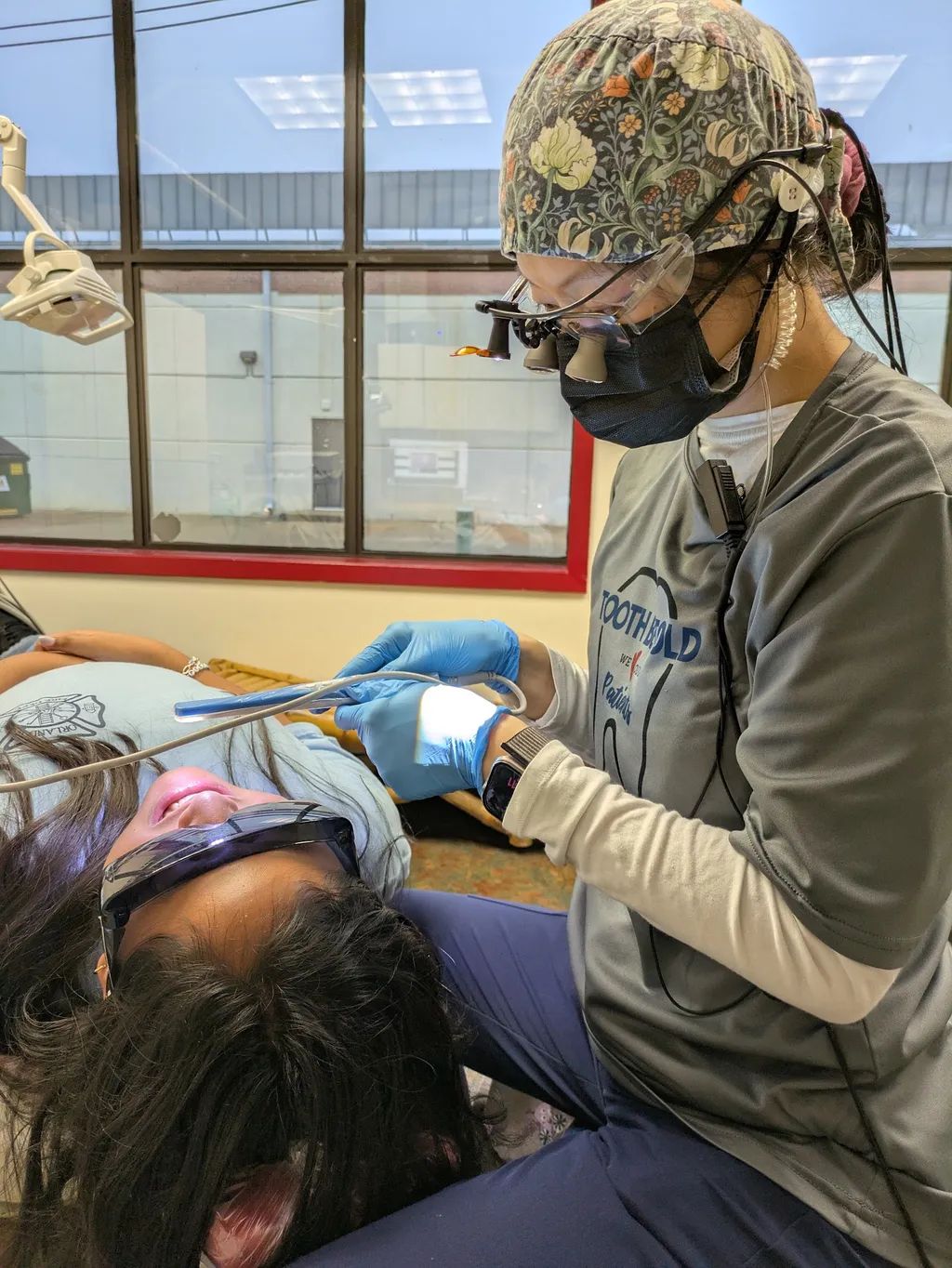
In-Office or Take-Home Trays: Which Is Better for Sensitive Teeth?
Mason Park Dental offers both. In-office whitening gets teeth noticeably whiter in a single visit. Take-home whitening uses custom trays made for your teeth, so you lighten them gradually, at your own pace.
For sensitive teeth, the research leans toward take-home.
An updated 2025 review of clinical trials found that the chance of getting sensitivity was about the same with either method. But when sensitivity did happen, it was milder with take-home whitening, and the shade change was similar (de Geus et al., 2025).
Gel strength matters too. For take-home trays, 10% carbamide peroxide caused less sensitivity than stronger gels, with no significant difference in color change (de Geus et al., 2018).
In the office, a 2026 summary of 24 reviews found that moderate peroxide strengths (about 25 to 35%) whitened about as well as higher ones, with less sensitivity (Hajeer & Hasan, 2026).
There is a limit to going gentle. In one trial, a very weak 6% in-office gel caused sensitivity in 44% of people, compared with 74% for a 35% gel. It also whitened noticeably less (Centenaro et al., 2026).
Gentler works, up to a point. Go too gentle and you trade sensitivity for a result you are not happy with.
For patients in Katy, Cinco Ranch and Fulshear with sensitive teeth, that is why the practice suggests custom take-home trays when sensitivity means going slowly, and in-office whitening when there is a wedding or a big day on the calendar.
How the whitening options compare
| Option | How it works | Control over sensitivity | What the research says | Good fit for |
|---|---|---|---|---|
| In-office whitening | Professional gel applied at the practice in one visit | The dentist chooses the gel and can apply a desensitizer first | Similar risk of sensitivity to take-home, but it tends to be more intense (de Geus et al., 2025) | Fast results before a date |
| Custom take-home trays | Lower-strength professional gel in trays made for your teeth | You can shorten wear time, space out days or pause | Milder sensitivity on average, with a similar shade change (de Geus et al., 2025) | Sensitive teeth and no rush |
| Over-the-counter strips | One-size strips coated with peroxide gel | No exam first; your only adjustment is stopping | Whiten better than placebo in trials (Naidu et al., 2020) | Healthy teeth, after a check-up |
| Whitening toothpaste | Polishing agents that scrub off surface stain | Depends on how abrasive the paste is | Remove surface stain, but less effective than strips (Naidu et al., 2020) | Keeping results after whitening |
| Charcoal powders and pastes | Abrasive charcoal brushed on the teeth | None | Not enough evidence that they are safe or effective (Brooks et al., 2017) | Not recommended |
A review of store-bought products found that strips do lighten teeth, while whitening toothpastes mostly remove surface stain (Naidu et al., 2020). Charcoal is a different story: a review of the research found no good evidence for it, and some reports of enamel wear (Brooks et al., 2017).
If you use a whitening toothpaste and your teeth are sensitive, check how abrasive it is on our toothpaste RDA chart. The low-abrasion end of the scale is where dentists tend to point people with sensitivity, gum recession or worn enamel.
What Helps Prevent Sensitivity During Whitening?
A few things have real research behind them.
- A desensitizing gel before in-office whitening. In one trial, a gel with 5% potassium nitrate and 2% sodium fluoride, applied before bleaching, cut sensitivity from 86.7% of patients to 46.7%, without affecting the whitening (Tay et al., 2009).
- Potassium nitrate and fluoride in general. A review of trials found that these two ingredients reduce whitening sensitivity (Wang et al., 2015).
- A desensitizer in the trays. In a small study of take-home trays, 11 of the 12 patients who used a potassium nitrate and fluoride gel in their trays reported less sensitivity (Haywood et al., 2001). It had no comparison group, so treat it as encouraging rather than proof.
- Fewer gel changes. In the office, a single application of gel whitened about as well as repeated applications, with a tendency toward less sensitivity (Hajeer & Hasan, 2026). At home, people who changed their gel more than once a day reported more side effects (Leonard et al., 1997).
Two popular ideas have weaker support.
Brushing with a 5% potassium nitrate toothpaste for a week before in-office whitening did not prevent sensitivity in one controlled trial (Ortega-Moncayo et al., 2022). And taking anti-inflammatory painkillers ahead of time has shown no meaningful preventive effect (Kurmanalina et al., 2026).
The tools that work best are the ones built into the plan: the right gel, the right schedule, and a desensitizer used directly on the teeth.
What We Look at Before Recommending Whitening
Before suggesting a gel or a method, the team looks at a few things.
- Where your sensitivity comes from. Cavities, cracked or leaking fillings, worn enamel and exposed roots are checked first. Decay and gum disease are treated before anything cosmetic.
- The kind of stain. Surface stain from coffee, tea and tobacco can come off with an AIRFLOW® cleaning, which is designed to be comfortable even for very sensitive teeth. Sometimes that is all that was needed.
- Your existing dental work. Whitening lightens enamel only. Fillings, crowns, bonding and porcelain veneers keep the shade they were made in, so the plan is to whiten first and match any new work afterwards.
- Stains that will not lift. Some discoloration does not respond to bleaching. It is covered rather than bleached, with bonding for a single tooth or veneers across several. Dr. Dave Cho will tell you which kind yours is.
- Your timeline and comfort. A date on the calendar points to in-office whitening. Sensitive teeth and no deadline point to take-home trays.
What Are the Risks and Limits?
Whitening is one of the simplest cosmetic treatments, but it is not risk-free, and it cannot do everything.
- Sensitivity and gum irritation. Both are known side effects of peroxide whitening (Carey, 2014). Tell us early so the plan can be adjusted.
- Results depend on your teeth. Dental work does not whiten, and some stains need bonding or veneers instead.
- Gentle has a ceiling. Very low-strength gels cause less sensitivity but also whiten less (Centenaro et al., 2026).
- Some pain is not whitening pain. A tooth that keeps aching after you stop, or one tooth that hurts far more than the rest, needs to be checked.
How Much Does Professional Teeth Whitening Cost in Katy?
Whitening is the least expensive cosmetic treatment Mason Park Dental offers.
New patients can get Kör whitening with at-home trays for $350. You can see the current details on the special offers page.
Otherwise, the price depends on whether you choose in-office or take-home whitening, and whether trays need to be made for you. Either way, it is quoted up front, before anything is booked.
If you are planning Invisalign®, a professional whitening gel (Kör) is included in every Invisalign treatment plan at the practice.
And if you are new and need a check-up first, the $189 new patient special covers a comprehensive exam, x-rays, a cleaning and a full treatment plan. It cannot be combined with insurance and does not apply if you have periodontal disease.
Frequently Asked Questions
How long does sensitivity last after professional teeth whitening?
For most people it is short-lived and settles once treatment is paused or finished. Research describes it as usually transient (Kurmanalina et al., 2026). If a tooth still hurts several days after you stop, or one tooth hurts much more than the others, call so we can check it.
Can I whiten my teeth if I have gum recession or exposed roots?
Often, yes, but it is a good reason to be examined first. Gum recession is closely linked with everyday sensitivity (West et al., 2013), and an exposed root can be treated on its own. Bonding, for example, can cover root surfaces that recession has left uncovered and sensitive.
Do sensitivity toothpastes actually work?
For everyday sensitivity, yes. A review of 31 trials found that toothpastes containing potassium, stannous fluoride or arginine reduced sensitivity compared with a placebo paste (Bae et al., 2015). Bring the one you use to your next cleaning and we will tell you whether it suits your mouth.
What can a dentist do for extremely sensitive teeth?
More than a toothpaste can. In a large analysis of trials, in-office treatments that seal exposed dentin, and laser therapy, all did better than placebo (Lin et al., 2013). At Mason Park Dental, fluoride varnish takes a couple of minutes at the end of a cleaning, and less sensitivity is a common side benefit where enamel has thinned.
Can whitening fix one tooth that is darker than the rest?
Sometimes not. Whitening lightens all the treated teeth together, and some discoloration does not respond to bleaching. A single tooth that stays dark is usually better covered with bonding. It is also worth having that tooth checked, so you know why it looks different.
Is whitening included with Invisalign at Mason Park Dental?
Yes. Every Invisalign treatment plan at the practice includes a professional whitening gel (Kör). Straightening usually comes first, then whitening, and then anything that needs to be color-matched.
Final Takeaways
- Most people with sensitive teeth can whiten professionally. The plan matters more than the product.
- Whitening sensitivity is common, affecting about half to six in ten people in trials, but it is usually temporary.
- Take-home trays with a lower-strength gel tend to cause milder sensitivity, with a similar shade change.
- Desensitizing gels with potassium nitrate and fluoride, used on the teeth, have the strongest evidence.
- Get existing sensitivity checked first. A cavity, worn enamel or an exposed root needs its own fix.
- Fillings, crowns, bonding and veneers do not whiten, so whiten before matching any new work.
Ask Whether Whitening Will Work for Your Teeth
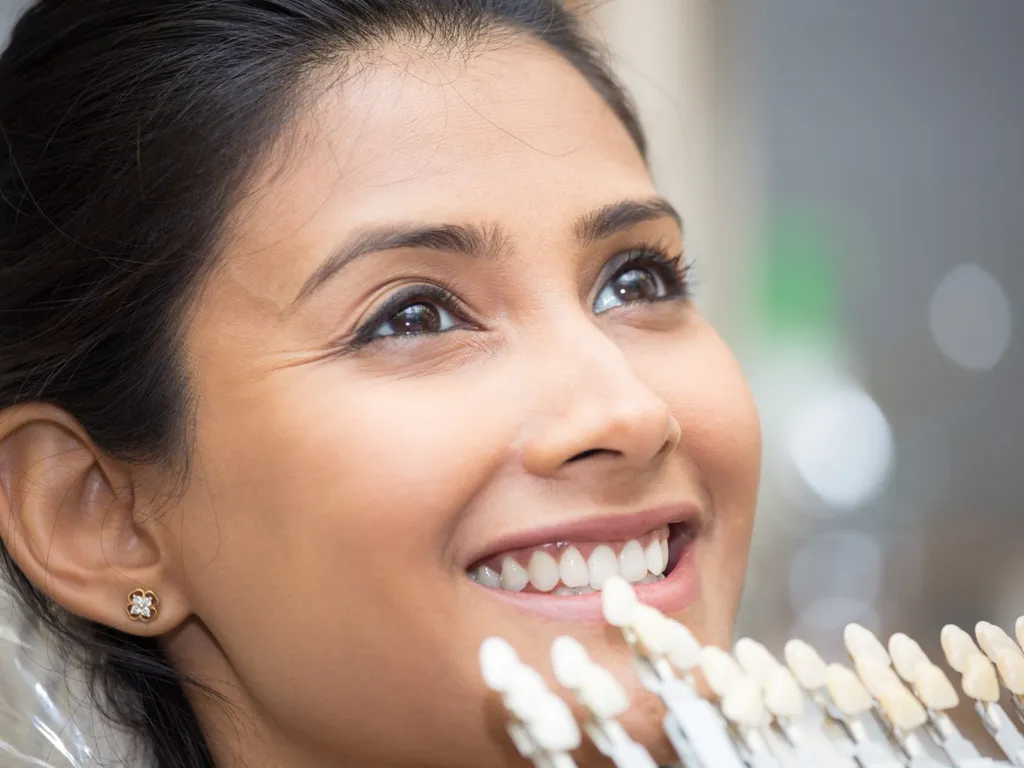
A shade guide and an exam will tell you more than any product label.
The easiest time to ask is at your next cleaning. Your teeth are already clean, and Dr. Dave Cho can tell you whether whitening will work on your particular stain, and which option suits your sensitivity.
Book a consultation or call (281) 769-8878.
Research References
- West NX, Sanz M, Lussi A, Bartlett D, Bouchard P, Bourgeois D. Prevalence of dentine hypersensitivity and study of associated factors: a European population-based cross-sectional study. Journal of Dentistry. 2013;41(10):841–851. https://doi.org/10.1016/j.jdent.2013.07.017
- Rezende M, Loguercio AD, Kossatz S, Reis A. Predictive factors on the efficacy and risk/intensity of tooth sensitivity of dental bleaching: a multi regression and logistic analysis. Journal of Dentistry. 2016;45:1–6. https://doi.org/10.1016/j.jdent.2015.11.003
- Kurmanalina MA, Tankibayeva ZG, Sagimbayeva TB, Ismagulova EK, Messova AM, Tamadon A. Interventions for bleaching-induced tooth sensitivity: an umbrella review. Frontiers in Oral Health. 2026;7:1927686. https://doi.org/10.3389/froh.2026.1927686
- Kwon SR, Wertz PW. Review of the mechanism of tooth whitening. Journal of Esthetic and Restorative Dentistry. 2015;27(5):240–257. https://doi.org/10.1111/jerd.12152
- Markowitz K. Pretty painful: why does tooth bleaching hurt? Medical Hypotheses. 2010;74(5):835–840. https://doi.org/10.1016/j.mehy.2009.11.044
- Carey CM. Tooth whitening: what we now know. Journal of Evidence-Based Dental Practice. 2014;14(Suppl):70–76. https://doi.org/10.1016/j.jebdp.2014.02.006
- de Geus JL, Martins A, Reis A, Rezende M. At-home vs in-office bleaching: an updated systematic review and meta-analysis. Operative Dentistry. 2025;50(4):E47–E69. https://doi.org/10.2341/24-078-LIT
- de Geus JL, Wambier LM, Boing TF, Loguercio AD, Reis A. At-home bleaching with 10% vs more concentrated carbamide peroxide gels: a systematic review and meta-analysis. Operative Dentistry. 2018;43(4):E210–E222. https://doi.org/10.2341/17-222-L
- Hajeer O, Hasan A. In-office tooth bleaching protocols: an umbrella review of systematic reviews and meta-analyses on whitening efficacy and tooth sensitivity. Saudi Dental Journal. 2026;38(4):39. https://doi.org/10.1007/s44445-026-00159-7
- Centenaro GG, Favoreto MW, Carneiro TS, Cordeiro DCF, Loguercio AD. Efficacy and tooth sensitivity of low- versus high-concentration hydrogen peroxide for in-office bleaching: a randomized clinical trial. Journal of Esthetic and Restorative Dentistry. 2026;38(4):905–914. https://doi.org/10.1111/jerd.70090
- Naidu AS, Bennani V, Brunton JMAP, Brunton P. Over-the-counter tooth whitening agents: a review of literature. Brazilian Dental Journal. 2020;31(3):221–235. https://doi.org/10.1590/0103-6440202003227
- Brooks JK, Bashirelahi N, Reynolds MA. Charcoal and charcoal-based dentifrices: a literature review. Journal of the American Dental Association. 2017;148(9):661–670. https://doi.org/10.1016/j.adaj.2017.05.001
- Tay LY, Kose C, Loguercio AD, Reis A. Assessing the effect of a desensitizing agent used before in-office tooth bleaching. Journal of the American Dental Association. 2009;140(10):1245–1251. https://doi.org/10.14219/jada.archive.2009.0047
- Wang Y, Gao J, Jiang T, Liang S, Zhou Y, Matis BA. Evaluation of the efficacy of potassium nitrate and sodium fluoride as desensitizing agents during tooth bleaching treatment: a systematic review and meta-analysis. Journal of Dentistry. 2015;43(8):913–923. https://doi.org/10.1016/j.jdent.2015.03.015
- Haywood VB, Caughman WF, Frazier KB, Myers ML. Tray delivery of potassium nitrate-fluoride to reduce bleaching sensitivity. Quintessence International. 2001;32(2):105–109. https://pubmed.ncbi.nlm.nih.gov/12066670/
- Leonard RH Jr, Haywood VB, Phillips C. Risk factors for developing tooth sensitivity and gingival irritation associated with nightguard vital bleaching. Quintessence International. 1997;28(8):527–534. https://pubmed.ncbi.nlm.nih.gov/9477880/
- Ortega-Moncayo MG, Aliaga-Sancho P, Pulido C, et al. Is the use of a potassium nitrate dentifrice effective in reducing tooth sensitivity related to in-office bleaching? A randomized triple-blind clinical trial. Journal of Esthetic and Restorative Dentistry. 2022;34(6):951–958. https://doi.org/10.1111/jerd.12826
- Bae JH, Kim YK, Myung SK. Desensitizing toothpaste versus placebo for dentin hypersensitivity: a systematic review and meta-analysis. Journal of Clinical Periodontology. 2015;42(2):131–141. https://doi.org/10.1111/jcpe.12347
- Lin PY, Cheng YW, Chu CY, Chien KL, Lin CP, Tu YK. In-office treatment for dentin hypersensitivity: a systematic review and network meta-analysis. Journal of Clinical Periodontology. 2013;40(1):53–64. https://doi.org/10.1111/jcpe.12011
This article is general information, not a diagnosis or a quote. Prices and offers change; your written treatment plan is the final word.